Case study
How a Sydney student-housing operator runs its back office on AI workflows
A Sydney student-housing operator now runs rent reconciliation, arrears follow-up, lease renewals and tenant messaging on AI workflows, with a person approving every message that goes out. The first workflow was running about two weeks after our first conversation. One staff member who used to switch between nine apps now works from one workspace. The client estimates about 70% less manual work. The client is not named.
The problem
| Before | Detail |
|---|---|
| Tools | One person moved between nine apps to run the back office |
| Recurring work | Matching rent payments, chasing arrears, renewing leases, answering tenant messages |
| Risk | Work depended on one person remembering every step |
What we built
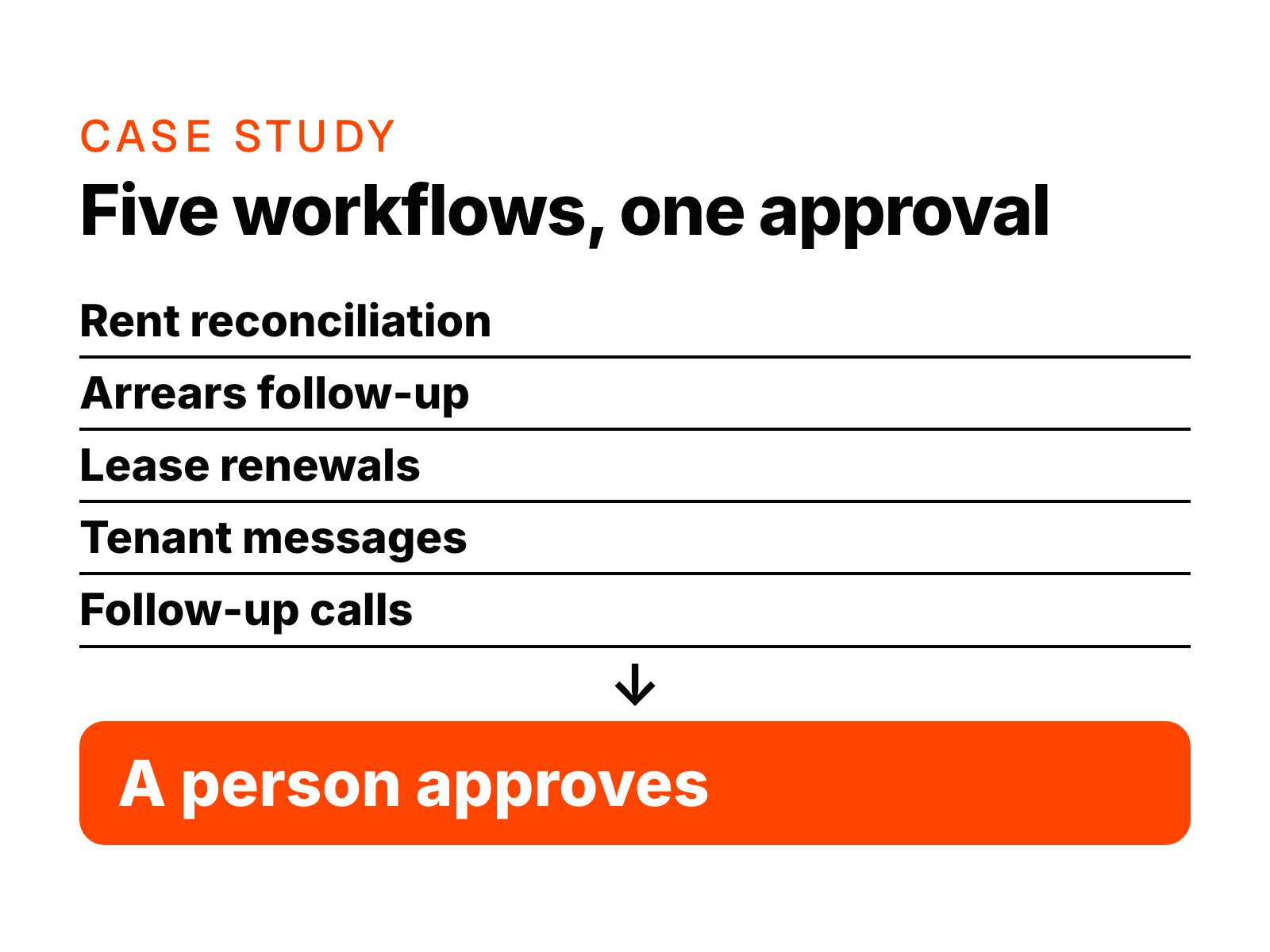
- Rent reconciliation: payments are matched to tenants and unmatched items are flagged for a person.
- Arrears follow-up: reminders are drafted on a schedule and a person approves them before they go out.
- Lease renewals: renewal notices and documents are drafted from the operator's own templates.
- Tenant messaging: incoming messages are sorted and first replies drafted for approval.
- AI follow-up calls: calls go only to existing tenants, follow the Do Not Call rules and say they are an AI assistant.
Each workflow runs inside tools the operator already used, and a person approves anything that leaves the business.
Results
| Measure | Result | Source |
|---|---|---|
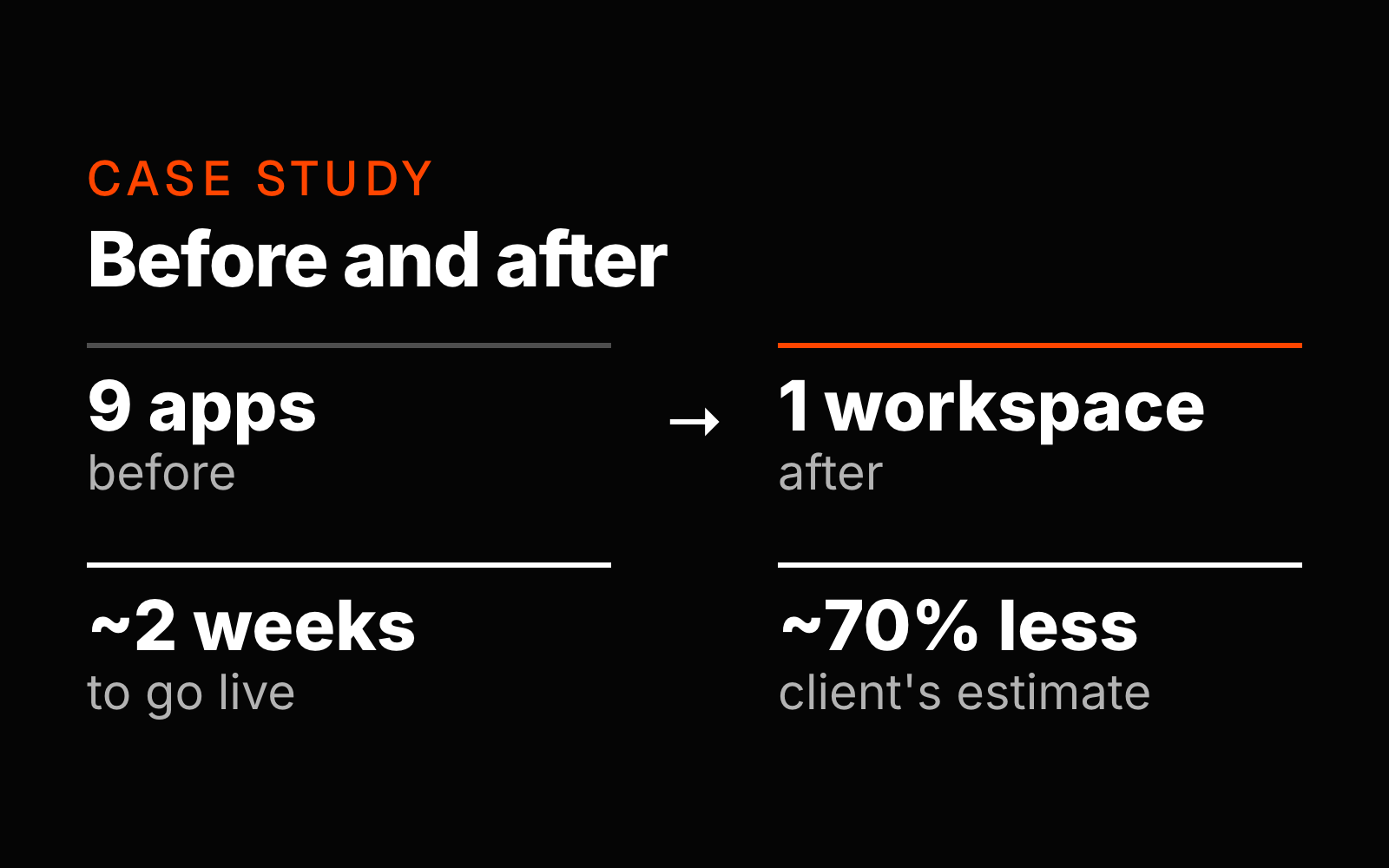
| Time to first workflow running | About 2 weeks from the first conversation | Project record |
| Apps used for the back office | 9 → 1 workspace | Project record |
| Manual work | About 70% less | The client's own estimate |
| Outgoing messages approved by a person | 100% | Workflow design |
What made it work
- The rules already existed in people's heads. Writing them down was the first job.
- The approval step stayed on, so the team could trust the output from day one.
- We started with the workflow that repeats most often.
Who this is relevant to
Businesses with 5–50 staff that run the same back-office jobs every week, in any industry: property, accounting, trades, clinics and similar. It is less relevant if most of your work needs a custom judgement on every case.